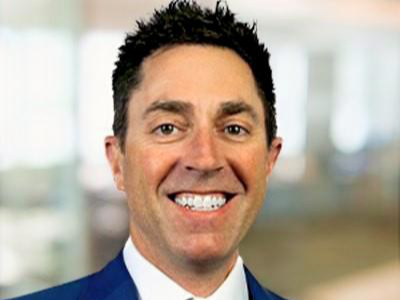
A chartered professional accountant by trade, Ottawa-based Jeff Johnson has worked at three major professional services firms where he has specialized in assurance and audit services.
Get Instant Access to This Article
Become an Ottawa Business Journal Insider and get immediate access to all of our Insider-only content and much more.
A chartered professional accountant by trade, Ottawa-based Jeff Johnson has worked at three major professional services firms where he has specialized in assurance and audit services.
He got his start at Deloitte, where he spent more than 20 years, then moved to BDO in 2022. This past August, he joined EY Canada’s assurance practice as a partner. With a focus on the technology sector, his clients have included publicly traded and private tech companies, both growing and established.
In a conversation with OBJ Wednesday, Johnson discussed what he’s learned about Ottawa’s tech community as an accountant, why major professional services firms are leveraging technology more than ever, and how his organization is navigating gaps in the talent pipeline.
This transcript has been edited for length and clarity.
You’ve worked at three major firms over the course of your career. What’s changed about the business since you started?
On the nine-to-five, nuts-and-bolts side of what we do we’ve had to manage our processes to see what's happening in the market. You look at all the corporate fraud that’s happened over the past year and all the firms that have had to change the process of how they go after and look for fraud. The audit profession has changed in a parallel way to make sure we’re doing things that way.
We’re also more connected with people and teams, so that people feel like they’re part of something. Getting back in the office has been a theme because it’s the fastest way of getting things done to a certain degree. It’s also the fastest way of developing people.
There’s been a lot more focus on leveraging technology, in terms of automation or AI. Firms are building out their consultancies in terms of how companies organize themselves when they implement new technology. Back in the mid-2000s, some of the big firms got rid of their consultancy practices and that’s been brought back under the roof as regulations have changed. You’ve seen some firms outsource certain things that are not seen as high value to try and make the math work in terms of metrics and taking advantage of what other businesses have done to manage what we do.
As someone in the cross-section of professional services and tech, what does your role look like?
It looks like everything from performing an actual audit on the company's financial statements to reporting to the company's audit committee or board, while also helping founders or entrepreneurs with advice or perspectives in terms of how to scale their business and find things they should be doing that might be best practices — what moves to emulate, what our other clients are doing — to help them understand how they’re performing. We're not necessarily selling to a company, we're helping them grow and scale and be successful in their own right.
In your work with your clients, what have you noticed about Ottawa’s tech community?
There’s the usual bread-and-butter stuff, like they need an audit or a review of financial statements or they need help with getting grants and incentives. Those are typically things that early-stage companies are looking for. But they’re also looking for help getting connected into a given ecosystem or to people who can fund the business or provide mentorship and guidance. We’re effectively acting as a kind of hub of the wheel, to connect everyone so that you can leverage people’s experience and success effectively and move along the learning curve as quickly and efficiently as possible.
The other thing is that, if I go back to when I started, there are a lot fewer companies headquartered in Ottawa. If you think back to the companies that used to be here that aren’t anymore, it looks a lot different from how it did 15 or 20 years ago. A lot of corporate experience that would have existed in those organizations is not as present as it used to be. If you look at the finance and legal side, those roles aren’t as common as they once were. It’s difficult to get experienced CFOs locally, versus having to go to the U.S., which is more common now than it was previously.
But professional services firms like accounting firms develop a lot of talent that goes into the market. You want to make sure they’ve got great roles and great companies to grow and scale. If you think of the Fullscripts and the Shopifys of the world, all the way to the Tomlinson Group, we want to make sure that we in the professional services are doing what we can to put good people out into the ecosystem.
Many sectors are dealing with talent gaps right now. What does that look like in your industry?
In our organization, what’s been really interesting is the capability of folks who started during COVID versus those who started before or after COVID. Having folks in the office, it’s not dissimilar from being a carpenter or a plumber — a lot of it is experiential. It’s an apprenticeship experience, so to speak. Having more junior people work with people who are more senior really helps accelerate the learning process. So it’s important for us to get folks back in the office and working with teams while also being out with clients — people who are smart, experienced founders, who are passionate and completely dialed into their businesses.
When we go in to audit a company, we have to understand how they work. That’s an awesome chance to understand what they’re doing: how they’re developing, how they’re using AI, what their product roadmap looks like, what market they’re going to be selling into, and what channels they’re looking for. It provides folks with tremendous benefit to their personal professional lives to learn how they help out from a commercial perspective in delivering what we deliver. It’s a great avenue to see what’s happening in the market.
How are you handling the exodus of senior talent as older professionals retire?
From a professional services standpoint, it’s about making sure people understand what their career trajectory looks like. It’s not necessarily just, ‘I don’t want to work a lot of hours,’ but having a holistic understanding of where you see yourself going. Do you want to be a senior leader in an organization or not? Helping people understand where they fit into the whole puzzle can help you guide them in a way that will help them be successful.
It’s less common now for people to join a professional services firm and want to be a partner or a senior leader; they just kind of want to check it out and see how it feels. But when you actually help people understand what’s available and the experience they can get in a large firm, it helps them be way more capable and way more marketable in the market.
Experience is super-valuable. Sometimes, no matter how smart or clever you are, you can’t shortcut experience. It helps to have people who have seen a few cycles where it’s been up and down and the market has moved. Right now, we’re in a situation with trade and tariffs and everything else. Having folks who have been around the block previously and sharing that experience is super-helpful to get future leaders ready to understand everything they could be facing in their roles.
Where do you see the industry going next?
With all the flash around AI, there isn’t enough airtime given to the unsexy stuff that has to happen in terms of how companies organize their data and manage their internal controls and processes. Being a CPA, that’s sort of our bread-and-butter. To have companies properly manage the capability of AI, you have to have good governance over your data. You have to have good controls and processes over how transactions are performed. I think there’s going to be a greater appreciation of that as companies can more fully leverage the capability of AI.